
Overview

djt bile duct 1 1024x1024

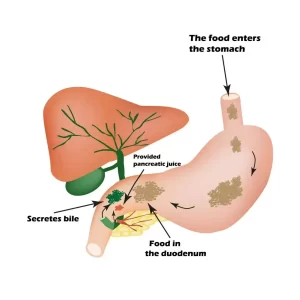
The biliary system refers to the organs that are responsible for producing and storing bile and impacting the digestive and metabolic processes. Bile is a fluid that aids the process of nutrient absorption, digesting fat, and waste removal. The gallbladder stores and concentrates bile, which is a fluid produced in the liver to help digest the fat contained in food. The liver is the body’s largest internal organ. It plays a vital role in digestion, producing bile to breakdown food. It also plays a crucial role in eliminating waste by breaking down toxins before they are flushed out. The liver is also a production center for several enzymes crucial to metabolism. The pancreas balances the body’s blood sugar by producing insulin, which is the enzyme that controls blood sugar levels.

The gallbladder, liver, and pancreas are also organs that can develop fatal cancers if not diagnosed and treated early enough. When someone develops a tumor within the bile duct, gallbladder, liver, or pancreas, surgery is usually required. Surgery removes part or the entire diseased organ and surrounding tissue, if necessary. These procedures were once done using open abdominal surgery in the past, but are currently performed using minimally invasive robotic surgery. Long-term treatment is often necessary for patients in severe cases.

The recommended solution for the pancreas or liver that develops an infection resulting from diseases or cancer is Hepato-Pancreato biliary surgery (HPB).

A study conducted by NIH found that 54% of 13,500 individuals who had HPB surgery underwent a robotic pancreatic surgery. Other common procedures include hepatic surgery that accounts for 36% of the cases and biliary surgery, amounting to 10% of the population.
Read More
70.3% of the subjects that were studied got treatment after being diagnosed with cancer. The success rate of HPB surgery is high, but it is always essential for patients to carefully consider the risks. The results are based on the right diagnosis, the type of procedure, and crucial clinical factors. When illness or pain afflicts the biliary system, liver, or pancreas, it is crucial to consult a medical specialist such as Dr. Joshua S. Tierney, who can assist.
Related Procedures

Endoscopic retrograde cholangiopancreatography (ERCP)

This procedure is used to obtain a biopsy of the tumor and also to relieve biliary obstruction related to the tumor by placement of a stent.

Whipple Procedure

This procedure is also known as a pancreaticoduodenectomy. It involves removing the head of the pancreas, the duodenum, the distal bile duct and the gallbladder. This procedure is performed when the tumor is located in the head of the pancreas. The whipple surgical procedure is performed through both open and robotic approaches by Dr. Tierney.

Extrahepatic bile duct resection

This procedure removes the portion of the bile duct that is located between the liver and the head of the pancreas.

Liver resection

This procedure is necessary for intrahepatic cholangiocarcinoma (tumor located in the liver or Hilum).

Complex Biliary Surgery

djt bile duct 2 1024x690

The biliary system refers to the organs that are responsible for producing and storing bile. Bile is a fluid that aids the process of nutrient absorption, digesting fat, and waste removal. When someone develops a tumor within the bile duct, gallbladder, liver, or pancreas, surgery is usually required. Complex biliary surgery consists of an operation on the gallbladder, bile ducts, and other structures involved in producing and transporting bile between the liver and the gastrointestinal tract. The biliary tree consisting of the liver, gallbladder, and bile ducts is essential to the body’s digestive and metabolic functions. These enzymes are involved in converting food into energy. These organs can be affected by several disorders including gallstones and liver cancer.

Historically, this surgery has used open abdominal methods. However, more modern techniques include laparoscopy and minimally invasive robotic surgery which has a shorter hospital stay. 
Robotic Complex Biliary Surgery

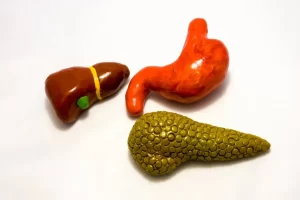
djt bile duct 3 1024x683Biliary surgery is perhaps the most complex surgical procedure since it involves more than one organ; liver, gallbladder, and bile ducts. Once these organs are dissected, the surgeon must reconnect the remaining organs to have a semblance of normal functioning.

When technically practical, minimally invasive duct repair (robotic) is preferred because of the reduced rate of complications after surgery, faster recovery, less pain, and returning to work earlier. 

Robotic complex biliary surgery enables highly precise dissecting of the bile ducts, hepatic artery, and portal vein. Robotic surgery makes it possible to delicately suture the bile ducts and avoid fistula or leaks after surgery.. However, robotic surgery enables the surgeon to do this more accurately and with less need for making big incisions, which gives the patient greater chances of healing successfully. Compared to the traditional laparoscopic technique, robotic complex biliary surgery is known for resulting in better outcomes.

Before surgery

The steps followed before surgery are:

  • An office visit for surgical consultation where a comprehensive history and physical exam is performed.
  • Completion of clinical tests for work-up and staging.
  • Multidisciplinary tumor board review for expert recommendation regarding treatment strategy.

After surgery

The type of surgical procedure done determines the kind of post-surgery care required. Post care after a surgical operation involves:

  • A brief admission to the ICU is sometimes required for complex procedures such as a whipple procedure. Recovery then continues in the hospital ward for another three to five days. Procedures performed robotically typically have a faster recovery and can expect discharge from the hospital one or two days earlier than after open procedures. 
  • The goals of postoperative care include: monitoring for and intervening on any complications that can occur, awaiting the resumption of normal bowel function, maintaining adequate hydration and nutrition, physical and occupational rehabilitation, and providing adequate pain control. Once these measures are met, the patient will be discharged from the hospital. Post-operative follow-up will be scheduled one week from discharge with Dr. Tierney.

Frequently Asked Questions About Bile Duct Conditions

The bile ducts are a branching system of tubes that carry bile from the liver to the small intestine. The liver produces bile continuously, the gallbladder stores and concentrates it between meals, and after eating it is released down the common bile duct into the duodenum, where it helps break down fat so it can be absorbed. Bile also carries waste products out of the liver for disposal. Because the ducts are narrow and the system is a single drainage route, anything that blocks them, whether a stone, scarring or a tumour, causes bile to back up rather than simply diverting around the obstruction.
Several, and they range from common to rare. Stones can pass out of the gallbladder into the common bile duct and lodge there, causing pain, jaundice, infection or pancreatitis. The ducts can narrow, called a stricture, either from inflammation, from previous surgery, or from a tumour. Bile duct cancer, cholangiocarcinoma, can arise anywhere along the system. Choledochal cysts are uncommon congenital dilatations of the duct that carry a cancer risk and are usually removed. Primary sclerosing cholangitis is an inflammatory condition that scars the ducts progressively. The ducts can also be injured during other abdominal surgery, most often gallbladder removal.
The characteristic sign is jaundice, a yellowing of the eyes and skin, caused by bile backing up. It is often accompanied by dark urine, pale or clay-coloured stools, and itching that can be intense and is sometimes the symptom patients find hardest to tolerate. Pain in the upper right abdomen is common when the cause is a stone, and may be minimal when the cause is a slow-growing tumour. Fever and chills alongside jaundice suggest infection within the ducts, called cholangitis, which is a medical emergency and needs same-day assessment. Unexplained weight loss and loss of appetite are more suggestive of a tumour.
Assessment usually starts with blood tests and an ultrasound, which shows whether the ducts are dilated and often whether stones are present. If more detail is needed, a CT scan or an MRCP, a form of MRI that maps the bile ducts without any instrument being passed, gives a clearer picture. Endoscopic ultrasound allows close examination and tissue sampling. ERCP is used where treatment is likely to be needed at the same time, since it can remove stones or place a stent to relieve a blockage during the same procedure. Which tests are used depends on what the initial results suggest and on how urgently the obstruction needs relieving.
A bile duct injury is damage to the duct that occurs during another operation, most commonly gallbladder removal. It is uncommon, but it is the most serious recognised complication of that surgery, and it matters because bile leaking into the abdomen causes significant illness and because a narrowed or divided duct will not function properly afterwards. Repair is specialist work. Depending on the injury, it may involve endoscopic stenting, or reconstructive surgery to join the healthy duct above the injury directly to a loop of small intestine. Outcomes are considerably better when the repair is performed by a surgeon who does this regularly, and when it is done at the right time rather than immediately. If you have persistent pain, jaundice or fever after gallbladder surgery, it should be assessed rather than waited out.
It depends entirely on the problem. Stones are often dealt with endoscopically at ERCP with no incision. Where surgery is needed, options include removing the affected segment of duct and reconnecting the remaining duct to the intestine, removing part of the liver where the tumour sits within it, or a Whipple procedure where the tumour is in the lower duct near the pancreas. These are among the more demanding abdominal operations because the ducts are small, they sit immediately alongside the hepatic artery and portal vein, and the reconstruction has to be watertight. Robotic surgery is used when it is technically appropriate, since magnified three-dimensional vision and fine instrument control assist precise dissection and suturing in that confined space. Not every case suits it, and the approach is decided during planning.