

ERCP
Overview
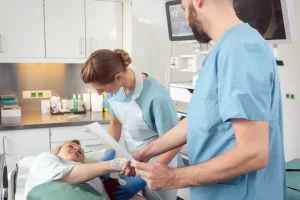 Endoscopy is a medical procedure where a flexible scope with a camera on the end is inserted into the body through a natural orifice (i.e. mouth or anus) to examine or perform interventions from inside the lumen of the hollow organs. There are many variations of endoscopic procedures including upper endoscopy, colonoscopy, endoscopic ultrasound, and endoscopic retrograde cholangiopancreatography (ERCP).
ERCP is an advanced endoscopic procedure for intervention on the biliary system or pancreas. The most common indication for ERCP is bile duct stones causing biliary obstruction or pancreatitis.
Other indications include malignant biliary obstruction, chronic pancreatitis, bile or pancreatic duct leaks, and many other indications. The procedure usually lasts about one hour and is performed under general anesthesia. Since there are no incisions, patients usually go home a couple of hours after the procedure.
Related Procedures
Colonoscopy
This is an examination of the rectum and sigmoid colon.
Sigmoidoscopy
This allows doctors to examine the inner rectum.
Enteroscopy
This is the examination of the small bowel.
Percutaneous Endoscopic Gastrostomy
This is an endoscopic procedure to place a feeding tube into the stomach.
Endoscopic Ultrasound
This is the examination of the upper GI tract to perform ultrasound of the pancreas or biliary tract. It can be used to perform biopsies in this area.
Endoscopic Retrograde
Cholangiopan-creatography (ERCP)
This is an endoscopic procedure to perform interventions on the biliary tract or pancreas.
Before surgery
Endoscopic procedures are relatively quick and safe. Dr. Joshua Tierney, MD, will discuss the procedure and it’s indications in detail during consultation either in the clinic (if it is an outpatient procedure) or the hospital ward (if it is outpatient). The risks of ERCP include: bleeding, perforation, pancreatitis, and failure to cannulate the duct of interest. Depending on the indications for the procedure, patients can often be discharged after a few hours of recovery if there are no complications.
General guidelines to prepare for ERCP:
- Don’t eat or drink. An empty stomach is necessary for safe general anesthesia. Typical guidelines recommend nothing to eat or drink from midnight the night before the planned procedure.
- Arrange for a ride home. All patients need a ride home after general anesthesia. They will be instructed to have someone drive them home after the endoscopy is complete.
- Discuss medications. Patients who are taking medication should inform Dr. Tierney. They may also want to discuss medication allergies and pain management preferences.
After surgery
After surgery, patients are given some time to recover and are monitored for possible complications. They are taken to recovery rooms where they can sleep or rest until the anesthesia wears off, and Joshua Tierney, MD, feels they are able to go home safely. Once at home, patients should continue to relax and take any medication prescribed to them as directed by Dr. Tierney.
Patients may experience some discomfort after the endoscopy procedure, such as bloating, pain, pressure, cramping, sore throat, and gas. These are common symptoms and should subside within a few days. Patients who experience more severe symptoms should notify Dr. Tierney immediately to make sure they are not having a complication. While complications are rare, they are possible. The sooner a problem is treated, the less likely it will become severe. Patients should contact Dr. Joshua Tierney, MD, if they experience any of these problems:
- Vomiting with blood or bloody stool
- Severe pain in the upper abdomen
- Jaundice
- High or sudden fever
- Chest pain or pressure
- Trouble breathing or wheezing
- Difficulty swallowing or speaking
Why You Should Choose Dr. Tierney For ERCP
Dr. Joshua Tierney, MD, is the only surgeon in Northern Colorado who performs ERCP. He is one of only a few physicians in the region who completed advanced fellowship training in ERCP. As such, he is more equipped to perform highly complex and difficult cases. Patients should inquire if their physician has completed a fellowship in advanced endoscopy when considering their options. In addition, having a surgeon who performs ERCP is a great advantage to patients as many times necessary surgical procedures (such as removing the gallbladder) can be performed together with ERCP under a single anesthesia which speeds recovery and shortens hospitalization times.
Frequently Asked Questions About ERCP
ERCP stands for endoscopic retrograde cholangiopancreatography. A flexible camera is passed through the mouth into the small intestine so that the bile duct and pancreatic duct can be examined and treated from the inside, without any incisions. The commonest reason for ERCP is a stone in the bile duct causing jaundice, pain or pancreatitis. It is also used to relieve blockages caused by tumours, to place stents, to treat narrowing of the ducts in chronic pancreatitis, and to manage bile or pancreatic duct leaks. It is both a diagnostic and a treatment procedure, so a problem found during the examination can often be dealt with in the same session.
Do not eat or drink anything from midnight the night before, since an empty stomach is necessary for safe general anaesthesia. Arrange for someone to drive you home, because you cannot drive yourself after an anaesthetic. Tell Dr. Tierney about all medications you take, including blood thinners, diabetes medication, and any over the counter or herbal supplements, as some need to be paused beforehand. Mention any allergies, previous reactions to anaesthetic, and any concerns you have about pain relief. If you are unsure whether to take a medication on the morning of the procedure, ask rather than guess.
The procedure is performed under general anaesthesia and usually takes around an hour, though complex cases take longer. The endoscope is passed through the mouth, down the oesophagus and stomach, and into the first part of the small intestine where the bile and pancreatic ducts drain. Contrast dye and X-ray imaging are used to see the ducts. Depending on what is found, stones can be removed, narrowed segments can be stretched or stented, and samples can be taken. Because nothing is cut, most patients go home a few hours later once they have recovered from the anaesthetic.
ERCP is generally safe, but it carries more risk than a standard endoscopy because the ducts are being instrumented. The most common complication is pancreatitis, inflammation of the pancreas, which usually settles with fluids and observation in hospital but occasionally becomes serious. Other recognised risks are bleeding, particularly if the duct opening has been cut to remove a stone, perforation of the bowel or duct, infection of the bile ducts, and reactions to anaesthetic. There is also a chance that the duct cannot be entered successfully, in which case another approach may be needed. These risks are weighed against the problem being treated and are discussed with you beforehand.
Mild bloating, cramping, wind, a sore throat, and some abdominal discomfort are normal for a few days after ERCP. Rest at home and take any prescribed medication as directed. Contact Dr. Tierney or seek urgent care straight away if you develop severe or worsening pain in the upper abdomen, vomiting blood or passing black or bloody stool, a high or sudden fever, yellowing of the eyes or skin, chest pain or pressure, difficulty breathing, or difficulty swallowing or speaking. These can be signs of pancreatitis, bleeding, perforation or infection. Complications are uncommon, but they are treated far more easily when reported early.
Often, yes, and this is a practical advantage of having a surgeon who also performs ERCP. Bile duct stones and gallstones frequently occur together, and traditionally the two problems are dealt with separately, sometimes on different days and by different specialists. When appropriate, the ERCP to clear the bile duct and the operation to remove the gallbladder can be carried out under a single anaesthetic. That means one preparation, one anaesthetic and usually a shorter overall recovery and hospital stay. Whether this is suitable depends on your imaging, your symptoms and how urgent each part of the problem is.