

Overview: Pancreatic Conditions
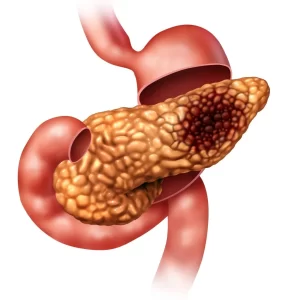 Within the human body exists a vital organ known as the pancreas. This organ plays an indispensable role in maintaining blood sugar levels by producing insulin, an enzyme that regulates these levels. Furthermore, it serves as a pivotal component of the digestive system, thanks to its production of enzymes that facilitate food breakdown.
Unfortunately, the pancreas is not immune to issues. Ranging from conditions such as diabetes to more severe ones like chronic pancreatitis, the spectrum of potential pancreatic problems is wide. The most concerning of these conditions is pancreatic cancer. This condition arises when a tumor develops within the pancreas. Similar to other forms of cancer, pancreatic cancer commences with a few cells that undergo uncontrollable division, culminating in a tumor.
Initially, the tumor cells remain localized within the pancreas. However, as the cancer advances, these cells can infiltrate the lymph nodes or other organs such as the liver, lungs, or abdominal cavity. While the exact reasons for the DNA damage in pancreatic cells are yet to be established, several risk factors, including obesity, smoking, exposure to certain environmental factors, and genetics, have been identified.
Pancreatic cancer is known for its aggressive nature. It has the potential to progress rapidly from stage I (localized disease) to stage IV (metastatic disease) in less than a year. Early diagnosis of pancreatic cancer is notably challenging due to the lack of efficient screening and imaging procedures. Consequently, only 20% of pancreatic cancer patients are diagnosed at an early stage. This cancer exhibits vague and non-specific symptoms, such as jaundice, itching, weight loss, loss of appetite, diarrhea, new-onset diabetes, and diffuse abdominal pain.
Given the severity of pancreatic conditions, the expertise of a
pancreatic surgeon in Loveland
is crucial. Individuals in need of
pancreatic surgery in Loveland
have access to surgeons like Dr. Joshua Tierney, an experienced and top-rated pancreatic surgeon. Dr. Joshua Tierney, MD, is renowned for offering the
best pancreatic surgery
in the region. He has established a reputation for providing top-notch, personalized pancreatic treatment plans.
Known for his commitment to multidisciplinary pancreatic care, Dr. Tierney presents a range of innovative pancreatic disease treatment options. His surgical repertoire includes a precise procedure known as pancreaticoduodenectomy, performed in Loveland. This procedure, acknowledged among healthcare professionals as one of the
top pancreatic surgery
options, is known for its successful pancreatic surgery recovery rates.
Scheduling a consultation with a
pancreatic surgeon
like Dr. Tierney is advised for individuals to review their case and discuss various pancreatic surgery options. Dr. Tierney, rated as one of the
best pancreas surgeon
s in Loveland, CO, along with his team at the pancreatic surgery hospital in Loveland, are dedicated to providing high-quality surgical care. They work tirelessly to advance the treatment options for pancreatic diseases.
When it comes to surgical procedures, cost is often a concern for many patients. However, one of the
best pancreatic surgeons
, Dr. Joshua Tierney, MD, and his team in Loveland are capable of providing various surgical procedures, including gallbladder and pancreatic surgery, at competitive prices. They accept a wide range of insurance plans, making treatment more accessible.
Symptoms of pancreatic cancer include: jaundice, itching, weight loss, loss of appetite, diarrhea, new-onset diabetes, and vague abdominal pain. These symptoms are discussed in more details:
- Pain – The growing tumor presses against the surrounding tissues and nerves, causing discomfort as it becomes more significant. The pain becomes severe when cancer develops beyond Stage III. In the early stages, the pain is relieved by strong prescription painkillers, which block the celiac plexus block nerves from sending pain signals to the nervous system.
- Weight loss - The discomfort in the stomach area, nausea, and vomiting contribute to making it difficult to eat and retain nourishment. The production of digestive fluids and enzymes which is needed for digestion and absorption of nutrients hampers, leading to rapid weight loss.
- Jaundice – In some cases, the tumor blocks the bile duct, preventing the stomach's normal release of bile. The high levels of bile in the liver cause jaundice, which shows in the yellowing of skin, eyes, and nails.
- Poor bowel movement – The pancreatic tumor can press into the small intestines (duodenum), making it obstructed. It slows down the normal flow of food in the digestive tract, adding to stomach discomfort, loss of appetite, and constipation.
In conclusion, early diagnosis and treatment significantly increase the chances of recovery from pancreatic conditions. Prompt medical attention should be sought at the onset of any symptom indicating a potential pancreatic disorder. For more information about the best pancreatic surgery and to be treated by a
top pancreatic surgeon
in Loveland, CO, please contact us today. Together, we can formulate a treatment plan that best suits your needs.
Robotic Pancreatic Cancer in Colorado
Early diagnosis of pancreatic cancer is often challenging. A
pancreatic doctor
usually suspects the diagnosis and orders a CT scan to evaluate the state of the pancreas. In some scenarios, pancreatic masses are discovered incidentally on a CT scan performed for different health reasons.
When a pancreatic mass is detected on imaging, an extensive workup is initiated to affirm the diagnosis, determine the disease stage, and assess if the tumor can be removed surgically. This involves additional tests, such as blood tests, endoscopic ultrasound, endoscopic retrograde cholangiopancreatography (ERCP), and occasionally an MRI or a supplemental CT scan in the hospital.
Once the workup is completed, each case is deliberated in a multidisciplinary tumor board. The team of specialists, inclusive of a
doctor for pancreas
, oncologists, radiation oncologists, radiologists, and genetic counselors, discuss the case and establish the appropriate treatment plan.
The disease can be treated with a curative intent if the pancreatic cancer is detected early and is localized. The treatment typically involves a mix of surgery, chemotherapy, and occasionally radiation therapy. Because of the aggressive nature of pancreatic cancer, a combination of surgery and chemotherapy is always necessary as either treatment alone proves inadequate.
Selecting a
robotic pancreatic surgeon in Loveland
with specialized training in pancreatic surgery is of paramount importance when commencing treatment for pancreatic cancer. This disease demands complex surgery, and outcomes in pancreatic surgery improve substantially when performed by surgeons with specialized training, such as Dr. Joshua Tierney.
Joshua Tierney, MD, a fellowship-trained hepatopancreatobiliary (HPB)
robotic surgeon for pancreatic cancer
, performs a high volume of pancreatic surgeries and has a commendable reputation for success. He also excels in the performance of intricate minimally invasive pancreatic surgeries using innovative robotic technologies, dictated by the disease extent.
In conclusion, treating pancreatic cancer necessitates a comprehensive approach that involves surgical and non-surgical interventions. The process can be highly challenging for patients, and hence the role of a
robotic pancreatic surgeon
who can seamlessly navigate the complexities is vital.

Related Procedures
This procedure is also known as a pancreaticoduodenectomy. It involves removing the head of the pancreas, the duodenum, the distal bile duct, and the gallbladder. This procedure is performed when the tumor is located in the head of the pancreas. The Whipple procedure is performed through both open and robotic approaches.
Distal pancreatectomy
This procedure is done when the cancer is confined to the tail or body of the pancreas. For pancreatic cancer, the spleen is removed with the tail of the pancreas so that all of the surrounding lymph nodes are removed with the tumor. This procedure is performed both open and robotically by Dr. Tierney.
Total pancreatectomy
This procedure removes the whole pancreas together with the small intestines, gallbladder, and spleen. It is possible to live without the pancreas but one must depend on insulin shots and oral enzymes for a lifetime.
The Best Pancreatic Surgeon in Loveland
Traditional pancreatic surgery entails an invasive procedure, where the abdomen is opened to gain access to the pancreas. This approach allows the surgeon a clear view of the surrounding organs and tissue. However, the major downside of this approach is the significant trauma involved.
The rise of
robotic pancreatic surgery
marks a new era in the field of pancreatic care. This minimally invasive technique leverages a surgeon-controlled robot for executing precise incisions. It is a favorable method for treating various types of pancreatic conditions, including benign masses, neuroendocrine tumors, pancreatic adenocarcinoma, cystic tumors, and chronic pancreatitis.
This technique has proven to be advantageous over traditional, open surgery due to its lesser degree of trauma, decreased blood loss, and minimized tissue injury. Consequently, recovery times are significantly reduced, allowing patients to commence chemotherapy sooner.
The robotic system used for this type of surgery is equipped with a 3D camera attached to the robotic arm. This setup allows the
top robotic pancreatic surgeon
to have a detailed view of the pancreas and the surrounding organs. The robotic arm, guided by the surgeon, is inserted via a small incision on the side of the abdomen. The pancreatic surgeon then directs the robotic arm to remove the tumor accurately.
The best pancreatic surgeons, like Dr. Joshua Tierney, an experienced pancreatic surgeon based in Loveland, Colorado, are adept at performing these cutting-edge procedures. A fellowship-trained surgeon who treats patients with utmost care, Dr. Tierney has established a reputation as a trustworthy pancreatic surgeon.
By leveraging the potential of robotic pancreatic surgery, Dr. Joshua Tierney, MD, and his team provide comprehensive pancreatic care at their surgery clinic in Loveland. They believe in providing a seamless patient experience, from the initial pancreatic surgery consultation to post-surgery care.
Contact us today to schedule an appointment with the best pancreatic surgeon in Loveland for a consultation regarding your pancreatic health.
Before surgery
The steps followed before surgery are:
- An office visit for surgical consultation where a comprehensive history and physical exam is performed.
- Completion of clinical tests for workup and staging.
Multidisciplinary tumor board review for an expert recommendation regarding treatment strategy.
After surgery
The type of surgical procedure done determines the kind of post-surgery care required. Post care after a surgical operation involves:
A brief admission to the ICU is sometimes required for complex procedures such as a Whipple Procedure Recovery then continues in the hospital ward for another three to five days. Procedures performed robotically typically have a faster recovery and can expect discharge from the hospital one or two days earlier than open procedures.
The goals of postoperative care include: monitoring for and intervening on any complications that can occur, awaiting the resumption of normal bowel function, maintaining adequate hydration and nutrition, physical and occupational rehabilitation, and providing adequate pain control. Once these measures are met, the patient will be discharged from the hospital. Post-operative follow-up will be scheduled one week from discharge with Dr. Tierney.
Frequently Asked Questions About Pancreatic Conditions
The pancreas has two jobs. It produces digestive enzymes that break down fat, protein and carbohydrate in the small intestine, and it produces hormones, chiefly insulin and glucagon, that regulate blood sugar. Insulin is a hormone rather than an enzyme, and the distinction matters because the two functions can fail independently. Damage to the enzyme-producing part causes difficulty digesting food and absorbing nutrients. Damage to the hormone-producing part causes diabetes. Some pancreatic conditions affect one function, some affect both.
The pancreas can be affected by inflammation, cysts and tumours. Acute pancreatitis is sudden inflammation, most often caused by gallstones or alcohol. Chronic pancreatitis is long-term inflammation that scars the gland and impairs its function. Cystic lesions are fluid-filled areas that are often harmless but sometimes carry a risk of becoming cancerous, which is why some are monitored and some are removed. Pancreatic cancer occurs when cells in the gland begin dividing uncontrollably and form a tumour, which can then spread to nearby lymph nodes or to other organs such as the liver. Diabetes results when the hormone-producing cells no longer work adequately.
Early pancreatic cancer often causes no symptoms at all, which is a large part of why it is difficult to detect. When symptoms do appear they are frequently vague and easily attributed to something else. The ones worth taking seriously are yellowing of the skin or eyes, itching, pale stools and dark urine, all of which suggest the bile duct is obstructed. Others include unexplained weight loss, loss of appetite, persistent discomfort in the upper abdomen that may radiate to the back, new diarrhoea or greasy stools, and diabetes appearing suddenly in someone with no previous history. None of these symptoms means cancer on its own, and most turn out to have other causes. Jaundice in particular should always be assessed promptly.
Diagnosis usually begins with a CT scan, either because symptoms raised the suspicion or because a mass was found incidentally on a scan performed for another reason. If a mass is seen, further tests follow to confirm what it is and how far it has spread. These can include blood tests, a dedicated pancreatic protocol CT, MRI, and endoscopic ultrasound, which allows a tissue sample to be taken. ERCP may be used where the bile duct is blocked. The findings are then reviewed by a multidisciplinary team including surgeons, oncologists, radiologists and pathologists, who together determine the stage and whether the tumour can be removed.
It depends on where the tumour is and whether it has spread. Surgery is considered when the cancer is confined to the pancreas and does not involve the major blood vessels behind it. Tumours in the head of the pancreas are treated with a Whipple procedure. Tumours in the body or tail are treated with a distal pancreatectomy, usually with removal of the spleen. Occasionally the whole gland is removed. If imaging shows spread to the liver, the lining of the abdomen or other distant sites, surgery is generally not recommended because it does not improve survival in that situation. Some tumours that are borderline at first become removable after chemotherapy, so an initial answer of no is not always final. Where surgery is possible, it is combined with chemotherapy, since neither alone is sufficient.
Both approaches remove the same tissue. Open surgery uses a single larger incision and gives the surgeon a direct view. Robotic surgery uses several small incisions, with instruments controlled from a console and a magnified three-dimensional view. In suitable patients the robotic approach involves less tissue trauma and blood loss, and recovery tends to be quicker, which matters here because it can allow chemotherapy to start sooner. It is not right for everyone. Tumour size and position, involvement of blood vessels, previous abdominal surgery and general health all affect the decision, and an operation may be started robotically and converted to open if that proves safer. The approach is chosen on clinical grounds during planning.
Outlook depends on the type of tumour, the stage at diagnosis, and whether it was removed completely. For pancreatic cancer of the head of the pancreas that is resectable, five-year survival is around 20 percent when surgery is followed by chemotherapy, and reaches 20 to 25 percent in high-volume centres. Without chemotherapy after surgery it is closer to 12 percent, which is why the two treatments are used together. Outcomes are better for tumours found early, for those removed with clear margins, and for neuroendocrine and cystic tumours, which behave very differently from pancreatic adenocarcinoma and generally carry a much better outlook. Population figures cannot predict what will happen to an individual, and your own situation is discussed at consultation.