
Most adults stay in the hospital for about 1 to 3 days after a laparoscopic or robotic Nissen fundoplication, and published series report a median stay of 2 days. Open fundoplication typically runs longer, around 4 days in published reviews. Your own stay depends on your health, the size of any hiatal hernia and how quickly you tolerate liquids.
If you have been told that fundoplication could help control your GERD or repair a hiatal hernia, one of the first practical questions is how many nights you will spend away from home. The answer shapes who drives you, who looks after things at home and how much time off you request. Published figures give a clear starting point, and the details of your own operation fill in the rest.
This guide comes from the practice of Dr. Joshua Tierney, a fellowship-trained surgeon in Loveland, CO who performs anti-reflux surgery and hiatal hernia repair for patients across Northern Colorado, Wyoming and Western Nebraska. It covers the hospital stay itself, meaning the nights you spend on the ward and the checks that come before discharge. The longer recovery at home is a separate topic and gets only a brief mention here.
In this guide, you’ll learn what published studies report about the length of stay, what usually happens between the operating room and discharge day, which factors can lengthen or shorten the stay, how the surgical approach changes the picture, and what to arrange before you go, especially if you are travelling to Loveland from farther away.
What the Typical Hospital Stay Looks Like After Fundoplication
The typical hospital stay after minimally invasive fundoplication is one to three days, with two days the figure that appears most often in published research. The Nissen fundoplication, in which the upper part of the stomach is wrapped around the lower esophagus to reinforce the valve between them, is the most common version of the operation, and most of the published stay data describes it.
One of the clearest sets of numbers comes from a study of 249 patients treated at two Finnish centres, published in the World Journal of Gastroenterology in 2013. After laparoscopic Nissen fundoplication, the median postoperative stay was 2 days, and the middle half of patients went home between day 2 and day 3. In plain terms, a typical patient in that series spent two nights in the hospital, while some left a little sooner and some stayed a little longer.
Patients treated in the later period of the same series had a median stay of 2 days, compared with 3 days in the earlier period, which suggests that stays can shorten as a surgical team and its ward refine their care. Length of stay reflects the whole system around the operation, not only the incision, and these figures describe study groups rather than Dr. Tierney’s own patient results.
| Published source | Approach | Reported stay | What it tells you |
|---|---|---|---|
| World Journal of Gastroenterology, 2013 (249 patients, two Finnish centres) | Laparoscopic Nissen fundoplication | Median 2 days (middle half: 2 to 3 days) | Two nights is the usual pattern for a planned minimally invasive operation |
| Same series, later treatment period | Laparoscopic Nissen fundoplication | Median 2 days (middle half: 1 to 2 days) | Stays tended to shorten as the team’s care pathway matured |
| Same series, earlier treatment period | Laparoscopic Nissen fundoplication | Median 3 days (middle half: 2 to 4 days) | Earlier experience in the series came with longer stays |
| World Journal of Gastroenterology systematic review | Open compared with laparoscopic | Open about 4 days; laparoscopic about 2.6 days shorter | The surgical approach is one of the biggest single drivers of stay |
From the Operating Room to Discharge Day, Step by Step
Most patients move from the recovery area to a hospital room on the day of surgery, begin sipping liquids when the surgical team allows it, and go home once they are drinking comfortably and moving on their own. Timing varies by hospital and surgeon, so treat the timeline below as a typical pattern rather than a schedule.
| Stage | What typically happens | What the team is usually watching |
|---|---|---|
| Day of surgery | You wake in the recovery area, then move to a room; sitting up and first sips of liquid may begin if your surgeon allows | Breathing, pain, nausea and how your swallowing feels |
| Day 1 | Liquids continue, you walk the hallway, and pain medicine shifts toward tablets or liquid forms | Whether liquids go down comfortably and pain stays manageable |
| Day 2 to 3 | Many patients are discharged in this window with written instructions on eating, activity and follow-up | That you can drink enough, move safely and understand your instructions |
The discharge instructions you receive will usually focus on eating, because the new wrap and the surrounding tissue are swollen for a while after surgery. Hospital patient education materials for laparoscopic Nissen fundoplication commonly describe a staged diet that starts with liquids, moves to soft foods and only later returns to a regular diet, and they note that the swelling can take several weeks to settle.
Those same materials typically advise avoiding iced, very hot or fizzy drinks, skipping straws, and steering clear of sticky or dry foods such as bread, rice, peanut butter and dry meat in the early period. They also recommend sitting upright to eat and staying upright for about 20 minutes after meals. Your surgeon’s own written instructions always come first, so treat these points as a preview.
Which Factors Can Lengthen or Shorten Your Stay
The length of your stay mostly comes down to the operation you need, how your body responds in the first day or two, and the health you bring into surgery. The table below sets out general patterns to discuss with your surgeon, not a prediction for your own case.
| Factor | Why it can matter | What the surgical team checks |
|---|---|---|
| Open surgery or conversion to open | Larger incisions usually mean more pain and a slower start, and published reviews link open surgery with stays of about 4 days | Pain control, walking and wound comfort |
| Large hiatal hernia or repeat (redo) surgery | A bigger or more complex repair can take longer and may need closer watching afterward | Swallowing, breathing and comfort as liquids begin |
| Pain and nausea control | Teams usually want pain and nausea well controlled before discharge | Whether oral medicine keeps you comfortable |
| Tolerance of liquids | The wrap is swollen early on, and some patients take longer to swallow comfortably | Steady intake of liquids without distress |
| Other health conditions | Heart, lung or other conditions can call for more monitoring after anesthesia | Your usual medical needs and medicines |
| Support at home | Going home alone or travelling a long way may change the team’s comfort with an early discharge | Who will be with you and how far you are going |
Several of these factors connect to the reason you needed surgery in the first place. Fundoplication is often paired with hiatal hernia repair, and both sit among the surgical conditions we treat in Loveland, so the planning conversation before surgery is the right time to ask how your particular hernia or reflux pattern might affect the stay.
Laparoscopic, Robotic and Open Fundoplication: How the Approach Affects Your Stay
Minimally invasive approaches, meaning laparoscopic and robotic fundoplication, are linked with shorter hospital stays than open surgery in the published research. The laparoscopic approach is linked with fewer complications and a shorter hospital stay than the open operation.
| Approach | How the surgeon reaches the stomach | Reported stay | What it means for planning |
|---|---|---|---|
| Laparoscopic Nissen fundoplication | Several small incisions with a camera and long instruments | Median about 2 days in published series | Plan for one to three nights |
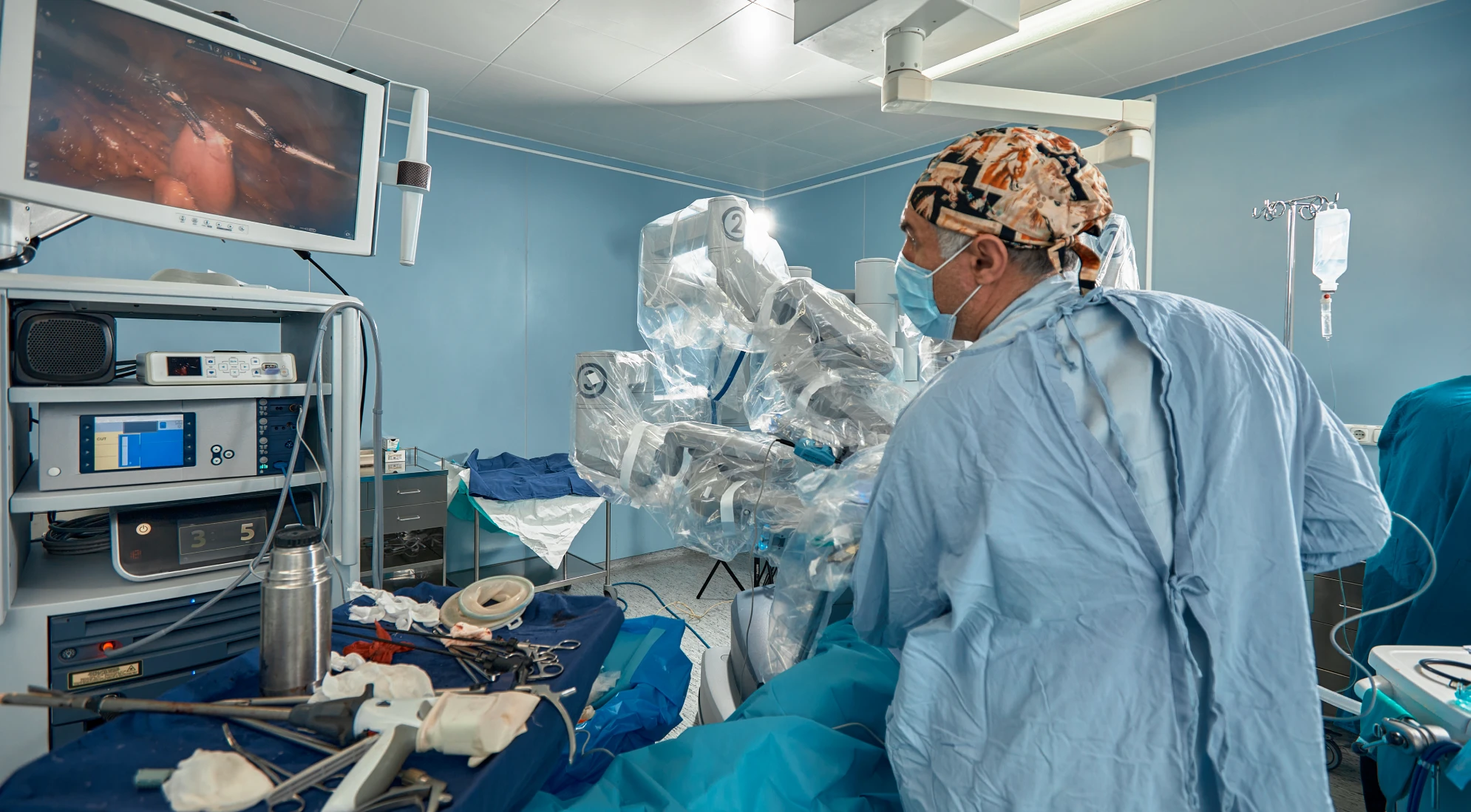
| Robotic Nissen fundoplication | Small incisions, with instruments guided through a robotic system | Similar to laparoscopic in one published comparison, roughly 2 days | Plan for one to three nights, as with laparoscopy |
| Open fundoplication | A larger abdominal incision | About 4 days on average in published reviews | Plan for a longer stay and a slower first week |
Because robotic and laparoscopic stays look similar in that comparison, the decision to use robotic assistance for minimally invasive reflux surgery usually rests on anatomy and the surgeon’s judgment more than on the number of nights in the hospital.
The benefits of a shorter stay come with trade-offs that apply to any approach. Known side effects of Nissen fundoplication include gas bloat, difficulty swallowing and, over time, loosening of the wrap, and the early swelling that causes swallowing discomfort is one reason the team watches how you handle liquids before you leave.
What to Arrange Before You Leave for the Hospital
A practical way to plan is to prepare for a two-night stay and keep a third night open in case you need it. That approach matches the published range and takes the pressure off if your team wants you to stay a little longer for pain control or liquids.
Patients who live in Loveland or Fort Collins can usually plan a short drive home, but many people reach the practice from Greeley, Longmont, the wider I-25 corridor, the Eastern Plains, Wyoming or Western Nebraska. If that describes you, it can help to plan the first night or two after discharge somewhere close to care, and to ask the surgical team about the return route and the timing of your follow-up visit before the day of surgery.
| Item to arrange | Why it helps |
|---|---|
| A driver for discharge day | Someone else should take you home after anesthesia and pain medicine |
| A flexible extra night | Covers a stay at the longer end of the 1 to 3 day range without rebooking |
| Lodging near care, if you live far away | Keeps you close to the surgical team for the first night or two after discharge |
| Liquids and soft foods at home | Matches the staged diet most discharge instructions describe |
| Room-temperature drinks and no straws | Follows the early-period advice in common discharge materials |
| Extra pillows or a recliner | Makes it easier to stay upright after meals |
| A written list of medicines and questions | Helps you get clear answers before discharge rather than after |
Dr. Tierney’s Evidence-Based Approach to Anti-Reflux Surgery
Dr. Tierney is a fellowship-trained surgeon whose work includes anti-reflux (GERD) surgery, hiatal hernia repair with fundoplication, robotic hernia surgery and complex hepatobiliary and pancreatic operations. The practice takes an evidence-based, patient-centered approach and looks at surgical care as one connected system rather than a single procedure.
In keeping with that evidence-based approach, this guide sets out the published range rather than a fixed number of nights, because your own stay depends on the factors described above. Our articles are written by James Whitfield, MS, and their medical content is reviewed by Dr. Tierney.
If you are weighing fundoplication, bring your questions about the stay to a consultation. You can contact our Loveland office about your discharge plan Monday to Friday, 8 AM to 5 PM.
Key Takeaways
- Most adults stay in the hospital for about 1 to 3 days after laparoscopic or robotic Nissen fundoplication. Published series report a median stay of 2 days, which in practice means two nights for a typical patient.
- Open fundoplication usually means a longer stay, around 4 days on average in published reviews. The minimally invasive approach is linked with fewer complications and a shorter hospital stay than the open operation.
- Robotic and laparoscopic fundoplication appear to produce similar stays, roughly two days in one published comparison. The choice between them usually rests on anatomy and surgical judgment rather than nights in the hospital.
- The team typically sends you home once you can drink liquids comfortably, keep pain and nausea under control with oral medicine and move safely. A large hiatal hernia, repeat surgery or other health conditions can extend the stay.
- Discharge instructions commonly describe a staged diet of liquids, then soft foods, then regular foods. They also advise avoiding very cold, very hot or fizzy drinks, straws and sticky foods early on.
- Planning for two nights with a third night in reserve keeps the stay low-stress. Patients travelling from Wyoming, Western Nebraska or the Eastern Plains may want to stay near care for the first night or two after discharge.
Frequently Asked Questions
Is fundoplication an outpatient surgery?
Published series report a median hospital stay of about two days after laparoscopic Nissen fundoplication. The sources used for this guide give no outpatient or same-day rates, so ask your surgeon whether a shorter stay could fit your own case.
Do you stay overnight after Nissen fundoplication?
In the published series the median stay was about two days, so many patients stay two nights after a Nissen fundoplication. Your surgical team decides on discharge once you are drinking comfortably and your pain is controlled.
How long until you can eat normally after fundoplication?
Discharge instructions commonly describe a staged diet: liquids first, then soft foods, then a regular diet. Swelling around the wrap can take several weeks to settle, so the return to normal eating happens at home, following your surgeon’s written plan.
When can you go home after robotic fundoplication?
Many patients go home one to three days after robotic fundoplication. One published comparison reported average stays of roughly two days for both robotic and laparoscopic Nissen fundoplication, so planning for two nights is reasonable.
Why would the stay be longer after hiatal hernia repair?
A large hiatal hernia or a repeat repair can make the operation more complex, and the team may want to watch swallowing, breathing and comfort for longer. Your surgeon can tell you whether your hernia is likely to affect the stay.
What are the usual discharge instructions after fundoplication?
Common instructions include starting with liquids, avoiding iced, hot or fizzy drinks, skipping straws, avoiding sticky foods such as bread and peanut butter, and staying upright for about 20 minutes after meals. Always follow your surgeon’s own instructions first.
Can you drive yourself home after fundoplication?
Plan for someone else to drive you home, because you will have had anesthesia and pain medicine. Your discharge instructions will explain when driving is reasonable again.
What should make you call the surgeon after going home?
Your discharge paperwork lists the specific warning signs your surgical team wants to hear about. Call the office if any of them appear or if something feels wrong, and call 911 for any emergency.
How long does the whole recovery take after fundoplication?
Full recovery takes longer than the hospital stay, since swelling around the wrap can take several weeks to settle. Return to work, lifting and the full diet progression are covered in our separate guide on recovering from fundoplication.
Does Dr. Tierney see patients from Wyoming and Nebraska?
Yes, Dr. Tierney’s practice serves the Northern Front Range and Eastern Plains of Colorado, plus Wyoming and Western Nebraska, and patients travelling longer distances can plan their stay and follow-up with the office before surgery.
Conclusion
The hospital stay after fundoplication is usually measured in days rather than weeks. For laparoscopic and robotic Nissen fundoplication, published series point to about one to three days, with two days the most common figure, while open surgery typically takes longer. The factors that move your own stay, from the size of a hiatal hernia to how quickly you tolerate liquids, are worth discussing well before surgery day.
Planning around a realistic window, with a driver, a spare night and support at home, makes the stay easier for you and your family. If you would like to talk through how the stay might look in your case, our Loveland office is ready to take your questions.
Call (970) 825-0881 to plan your fundoplication stay.
Book a reflux surgery consultation in Loveland today.
Medical disclaimer: This article is general education, not medical advice, and does not replace a consultation with a qualified surgeon. Individual stays and outcomes vary, and the figures quoted come from published studies, not Dr. Tierney’s own patient results. For urgent symptoms, call 911.