

Most hiatal hernia repairs take between one and three hours in the operating room, with two to three hours typical for a standard laparoscopic repair. Straightforward cases can finish in about 90 minutes, while large paraesophageal hernias take considerably longer. Your total time at the hospital will exceed the operative time, since anesthesia, positioning, and preparation add thirty minutes or more before the first incision.
If you’ve been told you need hiatal hernia repair, one of your first questions is probably how long the surgery will actually take and what to expect during recovery. The procedure typically lasts between one and three hours in the operating room, but several factors, including the size of your hernia and whether your surgeon uses minimally invasive techniques, can affect that timeline.
In this guide, you’ll learn what influences surgical time for hiatal hernia repair in Loveland, CO, how long you’ll likely stay in the hospital, and when you can realistically get back to your normal routine.
How Long Does Hiatal Hernia Surgery Take?
If you’re scheduled for hiatal hernia repair in Loveland, CO, you’re probably wondering how much time you’ll spend in the operating room. The good news is that modern minimally invasive techniques have made this procedure more efficient than ever.
Most hiatal hernia surgeries take between one and three hours, with many surgeons describing a typical timeframe of two to three hours for a standard laparoscopic repair. Surgeons in the Loveland area generally quote two to three hours under general anesthesia for laparoscopic repair.
Major medical centers confirm this timeframe. Published guidance reports that Nissen fundoplication, often performed alongside hernia repair, typically takes one to three hours, while other academic sources place the procedure between 90 minutes and three hours. The consistency across these sources is reassuring, since it means the range you hear locally reflects national practice rather than a local outlier.
What Affects How Long Your Surgery Will Take?
Size and Type of Your Hernia
The complexity of your hernia plays the biggest role in determining surgery length. Small sliding hiatal hernias require less extensive work and typically stay toward the lower end of the time range.
Large paraesophageal hernias demand more intricate work. Surgeons must carefully mobilize the esophagus, sometimes perform additional reconstruction steps, and ensure everything is properly positioned. Clinical studies show that giant paraesophageal hernias can take anywhere from 2 to 11.5 hours, with a median around 3.67 hours in complex cases.
That wide range is worth understanding rather than fearing. It reflects the fact that the largest and most complex hernias are genuinely different operations from a small sliding repair, not that the timing is unpredictable for any given patient.
Your Individual Health Factors
Several patient-specific factors can extend operative time:
- Body mass index: Higher BMI can make laparoscopic visualization more challenging, requiring additional time for safe completion
- Previous surgeries: Prior upper abdominal operations create adhesions that surgeons must carefully work through, adding time to the procedure
- Overall health: Patients with multiple medical conditions may require a more deliberate, cautious approach
None of these factors mean a worse outcome. They simply mean your surgeon may take additional time to complete the repair safely, which is the correct priority.
Surgeon Experience and Technique
Experience matters. Research demonstrates that surgical teams with established minimally invasive programs develop streamlined techniques that reduce operative time. As surgeons gain experience with these procedures, median operative times decrease while maintaining excellent outcomes.
This is one reason fellowship training and case volume are worth asking about during your consultation. A surgeon who performs these repairs regularly has refined each step of the operation, from how the hernia sac is dissected to how the diaphragmatic closure is secured. That refinement shows up as shorter operative times without any compromise in the quality of the repair, and it is a fair question to raise before scheduling.
Understanding Different Surgical Approaches
Laparoscopic Repair (Most Common)
This is the standard approach used in Loveland and most modern surgical centers. Laparoscopic hiatal hernia repair is performed through several small incisions using a camera and specialized instruments.
The procedure involves several key steps:
- Reducing the herniated stomach back into the abdomen
- Removing the hernia sac
- Closing the opening in the diaphragm
- Creating a fundoplication (wrap) to prevent reflux
Anesthesiology references list surgical time for laparoscopic Nissen procedures as approximately one to two hours for straightforward cases. Each of those four steps adds time, which is why a repair that includes a fundoplication runs longer than a simple reduction alone.
Open Surgery
Open surgery is now less common but remains an option for certain complex situations. Your surgeon might recommend this approach if you have giant hernias, dense adhesions from prior surgery, or complications requiring wider exposure. In those circumstances, the open approach is a deliberate choice made for safety rather than a fallback, and it can be the right decision when direct visualization is essential.
Patient experiences with open surgery describe substantially longer recovery periods, often ten to twelve weeks, compared to the minimally invasive approach. The operative time itself may not differ dramatically, but the recovery difference is significant.
Robotic-Assisted Repair
Some centers offer robotic-assisted repair. Early reports suggest operative times are similar to or slightly longer than conventional laparoscopy, particularly during the learning curve phase.
The robotic platform offers enhanced visualization and instrument articulation, which can be valuable in the confined space around the diaphragm. The table below compares the three approaches.
| Approach | Typical operative time | Recovery |
| Laparoscopic | 1 to 3 hours, often 2 to 3 | 3 to 6 weeks |
| Robotic-assisted | Similar or slightly longer | Comparable to laparoscopic |
| Open | Varies with complexity | 10 to 12 weeks |
What Happens Beyond the Operating Room Time?
When your surgeon tells you the surgery will take about two hours, that refers to the actual operative portion. Your total time at the hospital will be longer, often by several hours once check-in, preparation, and post-anesthesia recovery are counted.
Before Surgery Begins
You’ll typically arrive several hours early for:
- Check-in and paperwork
- Changing into a surgical gown
- IV placement
- Meeting with your anesthesiologist
- Final confirmation with your surgeon
Operating Room Preparation
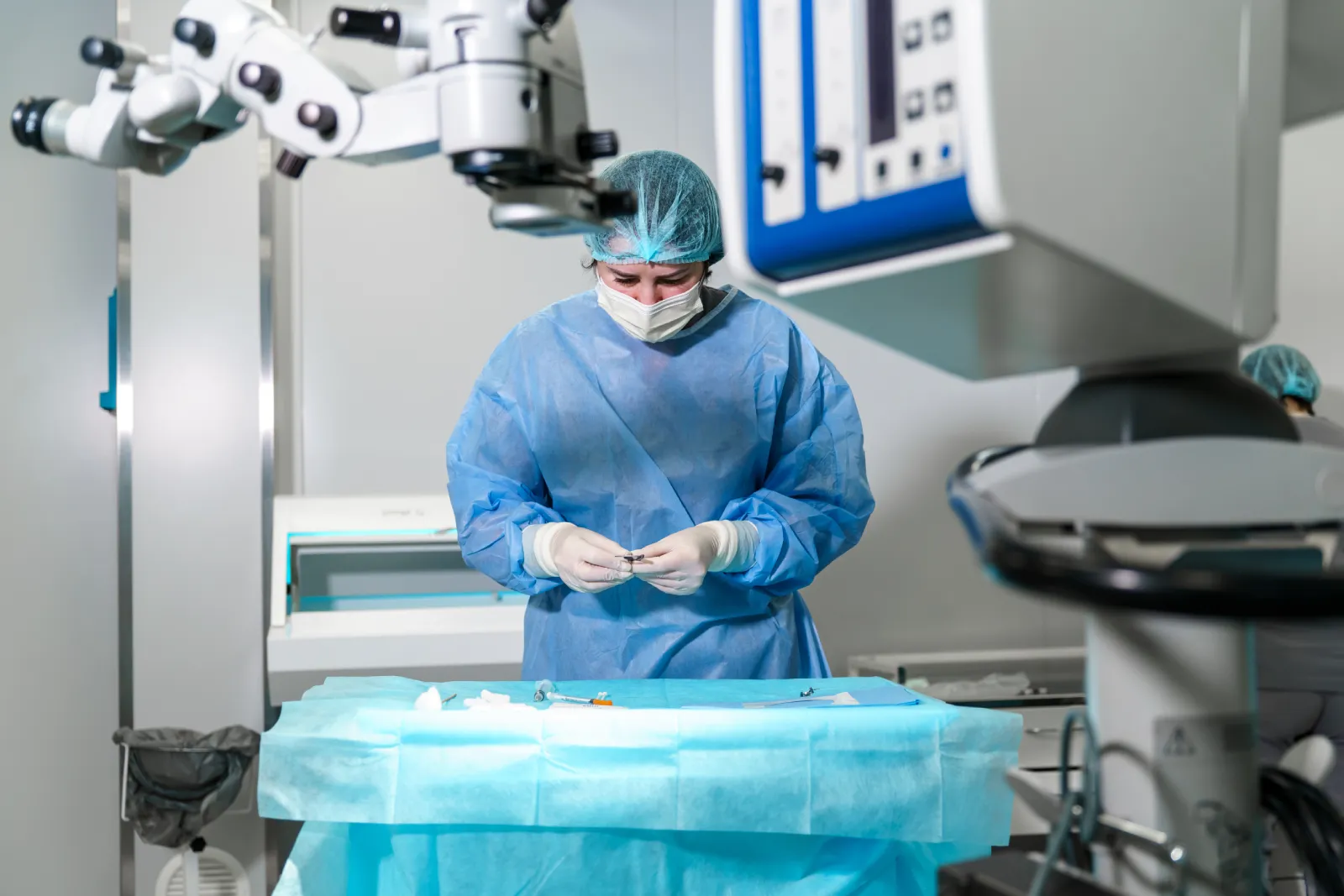
Before the first incision, the team needs time for anesthesia induction, airway management, patient positioning, and sterile preparation. This often takes thirty minutes or more, and none of it is wasted time, since careful positioning is what gives the surgeon safe access to the hiatus.
Your family should expect the total time from when you leave the pre-op area until they hear from the surgeon to be longer than the quoted operative time. Sharing this expectation with them in advance prevents unnecessary worry during a normal, uneventful procedure.
Hospital Stay and Recovery Timeline
Overnight Stay
Most patients in Loveland spend one night in the hospital and go home the following day. This allows medical staff to monitor your initial recovery, manage pain, and ensure you can tolerate liquids.
Patients with larger paraesophageal hernias may stay two to four days, depending on their individual recovery. Same-day discharge is possible for carefully selected patients with straightforward repairs and no complications. Your surgeon will make that call based on how the operation went and how you respond in the first several hours afterward, not on a predetermined schedule.
Getting Back to Normal
Recovery after laparoscopic repair is typically much faster than open surgery:
- First few days: Light activity at home, liquid or soft diet
- First two weeks: Gradual return to daily activities, avoiding heavy lifting
- Three to four weeks: Many patients return to work, especially for non-physical jobs
- Three to six weeks: Most patients fully recover and resume normal activities
Your individual timeline will depend on factors like hernia size, your overall health, and how well you follow post-operative instructions. Because the repair involves the diaphragm, the lifting restrictions in those first weeks matter more than patients often expect. Straining too early can put tension on the diaphragmatic closure, which is exactly what the restrictions are designed to prevent while the repair heals.
Surgical Expertise in Loveland
Loveland residents have access to high-quality surgical care without traveling to larger cities. UCHealth Medical Center of the Rockies is a 193-bed regional medical center equipped with advanced operating rooms and comprehensive surgical capabilities.
Fellowship-trained surgeons practicing in Loveland focus on minimally invasive approaches, which means smaller incisions, less pain, and faster recovery compared with traditional open surgery. The locally quoted two to three hour operative time reflects the use of these modern, evidence-based techniques in a well-equipped regional facility.
This level of infrastructure and expertise means you can expect the same quality outcomes as you would find at major academic medical centers, with the convenience of staying close to home and your support system during recovery. For patients whose hernia is accompanied by chronic reflux, that same expertise covers GERD treatment as part of the surgical plan.
Choosing a fellowship-trained surgeon in Loveland also means your follow-up care happens locally, which matters during the weeks when activity restrictions and diet advancement need monitoring. Patients considering repair can schedule a consultation to review imaging, discuss hernia size, and get a realistic time estimate for their specific case.
Key Takeaways
- Hiatal hernia repair in Loveland typically takes two to three hours in the operating room, though straightforward cases may finish in 90 minutes and complex hernias can take longer. Your total hospital time will be longer due to pre-op preparation and anesthesia.
- Most patients spend one night in the hospital after laparoscopic hiatal hernia repair and go home the next day. Same-day discharge is possible for carefully selected patients with uncomplicated repairs.
- Hernia size, your body mass index, previous abdominal surgeries, and your surgeon’s experience all affect how long your surgery takes. Larger paraesophageal hernias require more intricate work and longer operative times.
- Laparoscopic repair offers much faster recovery than open surgery, with most patients returning to work within three to four weeks and fully recovering in three to six weeks. Open surgery can require ten to twelve weeks of recovery.
- Loveland offers fellowship-trained surgeons and modern surgical facilities, so you can receive high-quality minimally invasive care close to home without traveling to larger cities.
- Operative time is a poor measure of surgical quality. A longer operation often reflects a larger hernia or a careful, deliberate approach, and taking the necessary time is what protects the outcome.
Frequently Asked Questions
How many hours is a hiatal hernia surgery?
Most repairs take one to three hours, with two to three hours typical for standard laparoscopic surgery. Straightforward cases can finish in about 90 minutes, while large paraesophageal hernias take longer. Total hospital time exceeds the operative time.
Why do some hiatal hernia surgeries take longer than others?
Hernia size and type matter most, since large paraesophageal hernias require esophageal mobilization and sometimes reconstruction. Higher BMI, adhesions from previous abdominal surgery, and other medical conditions can also extend the operation as the surgeon proceeds carefully.
How long does a giant paraesophageal hernia repair take?
Clinical studies report a wide range for giant paraesophageal hernias, from about 2 to 11.5 hours, with a median near 3.67 hours in complex cases. These are substantially more involved operations than a small sliding hernia repair.
Is my total hospital time the same as the surgery time?
No. The quoted time covers only the operative portion. You arrive several hours early for check-in, IV placement, and anesthesia consultation, and the team needs thirty minutes or more for induction, positioning, and sterile prep before the first incision.
How long will I stay in the hospital?
Most patients spend one night and go home the next day, which allows staff to monitor recovery, manage pain, and confirm you tolerate liquids. Larger paraesophageal repairs may require two to four days, and select straightforward cases can go home the same day.
How long is recovery after laparoscopic hiatal hernia repair?
Expect light activity and a liquid or soft diet in the first few days, a gradual return to daily activities over two weeks, work at three to four weeks for non-physical jobs, and full recovery around three to six weeks.
How does recovery compare between laparoscopic and open surgery?
Laparoscopic repair recovers much faster, generally three to six weeks, while open surgery often requires ten to twelve weeks. Open surgery remains an option for giant hernias, dense adhesions, or complications that require wider exposure.
Does robotic surgery take longer than laparoscopic?
Early reports suggest robotic-assisted repair takes a similar amount of time or slightly longer than conventional laparoscopy, particularly during a surgical team’s learning curve. The platform offers enhanced visualization and instrument movement in the tight space near the diaphragm.
Does a longer surgery mean something went wrong?
Usually not. Longer operative times most often reflect a larger or more complex hernia, prior surgical adhesions, or a deliberately cautious approach. Taking the time needed to complete the repair safely is what protects your long-term outcome.
Can I have hiatal hernia surgery in Loveland rather than a larger city?
Yes. Loveland has fellowship-trained surgeons and a well-equipped regional medical center with advanced operating rooms, so patients can expect outcomes comparable to major academic centers while recovering close to home and their support system.
Conclusion
For most patients, hiatal hernia surgery runs one to three hours, and two to three hours is the realistic expectation for a standard laparoscopic repair in Loveland. What moves the number within that range is mostly the hernia itself: a small sliding hernia sits at the low end, while a large paraesophageal repair involving esophageal mobilization and reconstruction takes considerably longer. Prior abdominal surgery, BMI, and overall health can add time as well.
It helps to remember that operative time is not a measure of how well the surgery goes. A longer case usually means a more complex repair or a surgeon working deliberately, which is exactly what you want. Plan for a hospital day that runs longer than the quoted surgical time, expect one night in the hospital, and give yourself three to six weeks for a full laparoscopic recovery. Understanding the anatomy involved and the steps of the repair makes those timelines much easier to put in context.
Get a clear time and recovery estimate for your specific hernia.
Schedule a consultation with Dr. Joshua Tierney’s team in Loveland.